Educational Resources
We believe good canine rehabilitation starts with good information.
The field of canine rehabilitation and conditioning continues to evolve, and our approach is guided by current veterinary knowledge, clinical experience, and the available scientific evidence. This page brings together research papers, published studies, and other educational resources that may help you better understand the principles behind rehabilitation, conditioning, pain management, mobility, and healthy movement.
Research can be dense and highly technical, so these resources are not intended to replace advice from your veterinarian or rehabilitation professional. Instead, they are here to help you learn more, ask informed questions, and better understand the recommendations we make for your dog.
We will continue to add resources as new research becomes available and as we find publications that we believe are useful and relevant to canine rehabilitation.
Research & Published Studies
Evidence for Canine Rehabilitation and Physical Therapy
Millis, D. L. & Ciuperca, I. A. (2015)
Veterinary Clinics of North America: Small Animal Practice, 45(1), 1–27.
Rehabilitation isn't simply about getting a dog moving again. How tissues respond to reduced activity, how loading is gradually reintroduced, how progress is measured, and how exercises and therapeutic modalities are selected all play a role in a rehabilitation program.
This review brings together research relating to canine physical rehabilitation and discusses the effects of reduced loading on tissues including muscle, bone, cartilage, tendons, and ligaments. It also reviews outcome assessment, therapeutic and aquatic exercise, physical modalities, and rehabilitation for orthopedic and neurologic conditions.
The authors also highlight an important consideration when interpreting rehabilitation research: there are still relatively few canine-specific studies for some rehabilitation techniques and modalities. That means evidence should be considered alongside the individual patient's diagnosis, goals, response to treatment, and veterinary assessment.
Millis DL, Ciuperca IA. Evidence for canine rehabilitation and physical therapy. Vet Clin North Am Small Anim Pract. 2015 Jan;45(1):1-27. doi: 10.1016/j.cvsm.2014.09.001. PMID: 25432679.Effect of postoperative underwater treadmill therapy on functional recovery in dogs undergoing intervertebral disc surgery: a retrospective matched cohort study
Kuricová, M., Török, M., Zelezník, P. & Lipták, T. (2026)
Journal of Veterinary Internal Medicine, 40(4).
Underwater treadmill therapy is commonly used as part of rehabilitation following spinal surgery, but objective evidence supporting its contribution to neurologic recovery is still developing.
This 2026 retrospective matched cohort study looked at 34 dogs recovering from surgery for intervertebral disc disease (IVDD). Seventeen dogs received supervised underwater treadmill therapy twice weekly for six weeks, while 17 matched dogs completed owner-guided exercises at home.
Both groups improved during recovery. However, the dogs receiving structured underwater treadmill therapy showed greater improvement in neurologic function from the second week onward and reached independent walking sooner than the matched control group. The median time to independent ambulation was shorter in the underwater treadmill group, and no underwater-treadmill-related adverse events were reported.
Kuricová M, Török M, Zelezník P, Lipták T. Effect of postoperative underwater treadmill therapy on functional recovery in dogs undergoing intervertebral disc surgery: a retrospective matched cohort study. J Vet Intern Med. 2026 Jul 1;40(4):aalag134. doi: 10.1093/jvimsj/aalag134. PMID: 42456055; PMCID: PMC13372091.A Pilot Study on the Effects of a 10-Session Underwater Treadmill Programme on Canine Joint Range of Motion
Twarowska, J., Strychalski, J. & Gugołek, A. (2025)
Animals, 15(21), 3186
Joint mobility is an important part of functional movement, and changes in range of motion can be useful when monitoring a rehabilitation program.
This pilot study examined the effects of a 10-session underwater treadmill program on passive range of motion (PROM) in 50 dogs with a variety of disorders. Each dog completed two 20-minute underwater treadmill sessions per week for five consecutive weeks. Researchers measured the range of motion of the carpal, elbow, shoulder, tarsal, stifle, and hip joints before and after the program.
After the 10 sessions, the researchers found measurable improvements in both flexion and extension across all of the joints examined. Overall passive range of motion increased, with the greatest median improvement observed at the hip.
Twarowska J, Strychalski J, Gugołek A. A Pilot Study on the Effects of a 10-Session Underwater Treadmill Programme on Canine Joint Range of Motion. Animals (Basel). 2025 Nov 1;15(21):3186. doi: 10.3390/ani15213186. PMID: 41227516; PMCID: PMC12607352.Professional Textbooks & References
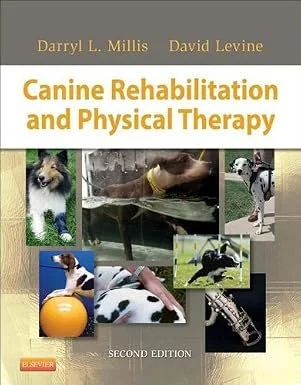
Canine Rehabilitation and Physical Therapy
Darryl L. Millis, MS, DVM, DACVS, CCRP & David Levine, PT, PhD, DABPTS (Orthopaedics)
Elsevier | ISBN 978-0443112294
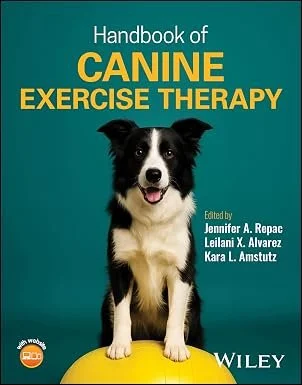
Handbook of Canine Exercise Therapy
Jennifer A. Repac, DPT, CCRT, CCRP, CSCS, Leilani X. Alvarez, DVM, DACVSMR, CCRT, and Kara L. Amstutz, PT, CCRT
Wiley | ISBN 978-1394171972
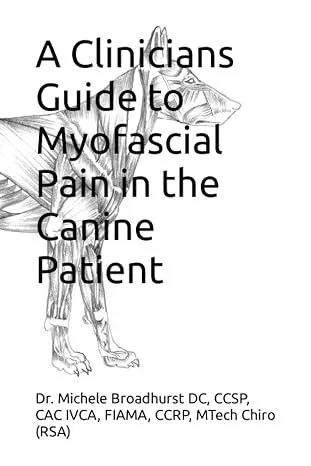
A Clinicians Guide to Myofascial Pain in the Canine Patient
Dr. Michele Broadhurst DC; CCSP, CAC IVCA, FIAMA; CCRP; Mtech Chiro (RSA) and Dr. Antony Angus D.C.; FIAMA; MTech Chiro (RSA)
ISBN 979-8428067347
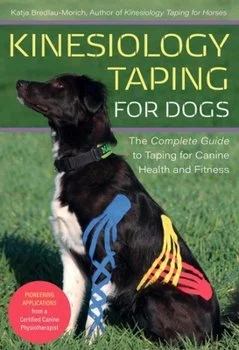
Kinesiology Taping for Dogs: The Complete Guide to Taping for Canine Health and Fitness
Katja Bredlau-Morich
Trafalgar Square Books | ISBN 9781646010226
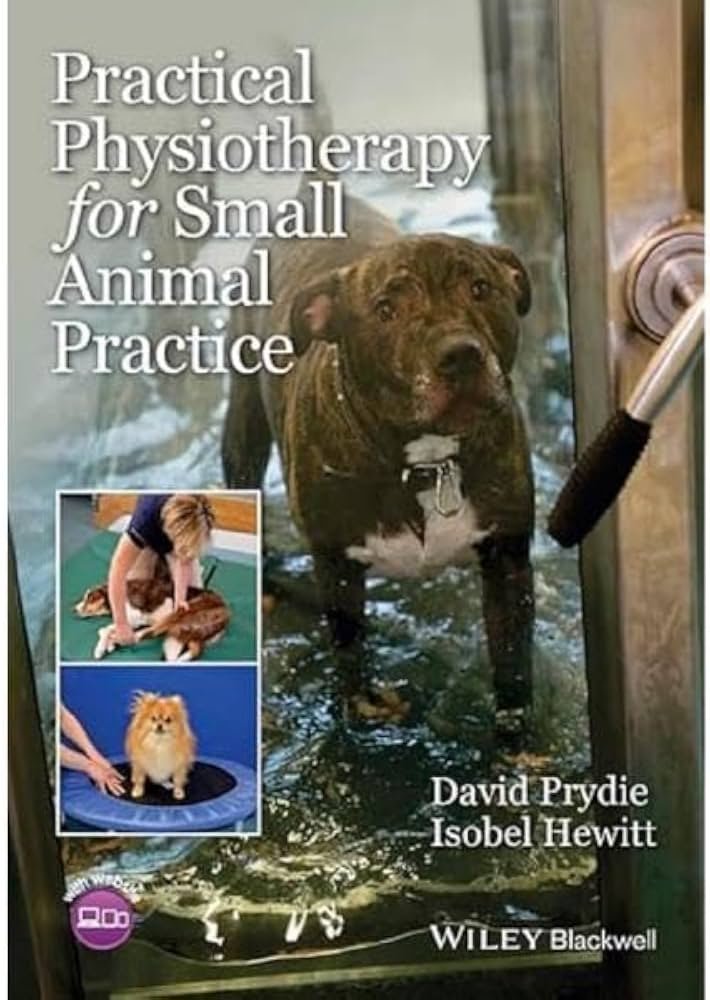
Practical Physiotherapy for Small Animal Practice
David Prydie, Isobel Hewitt
Wiley | ISBN 9781118661543
Introduction to the Canine Patient
Created for The Animal Rehab Division of the Canadian Physiotherapy Association
Laurie Edge-Hughes BScPT, CAFCI, CCRT, MAnimSt (Animal Physio)
ISBN 9780981243108
Introduction to Canine Rehabilitation
Created for The Animal Rehab Division of the Canadian Physiotherapy Association
Laurie Edge-Hughes BScPT, CAFCI, CCRT, MAnimSt (Animal Physio)
ISBN 9780981243115
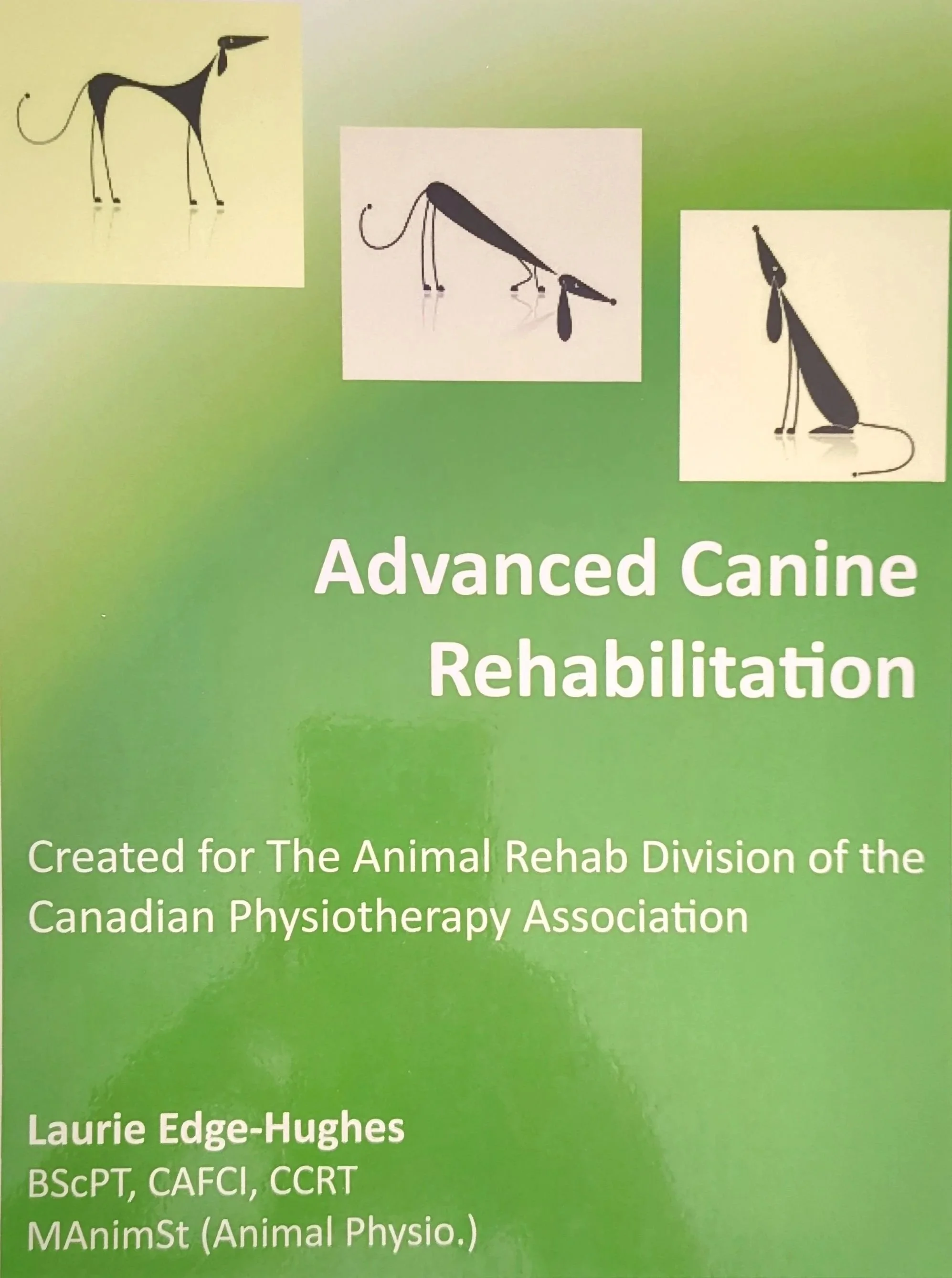
Advanced Canine Rehabilitation
Created for The Animal Rehab Division of the Canadian Physiotherapy Association
Laurie Edge-Hughes BScPT, CAFCI, CCRT, MAnimSt (Animal Physio)
ISBN 9780981243122