
Canine Massage
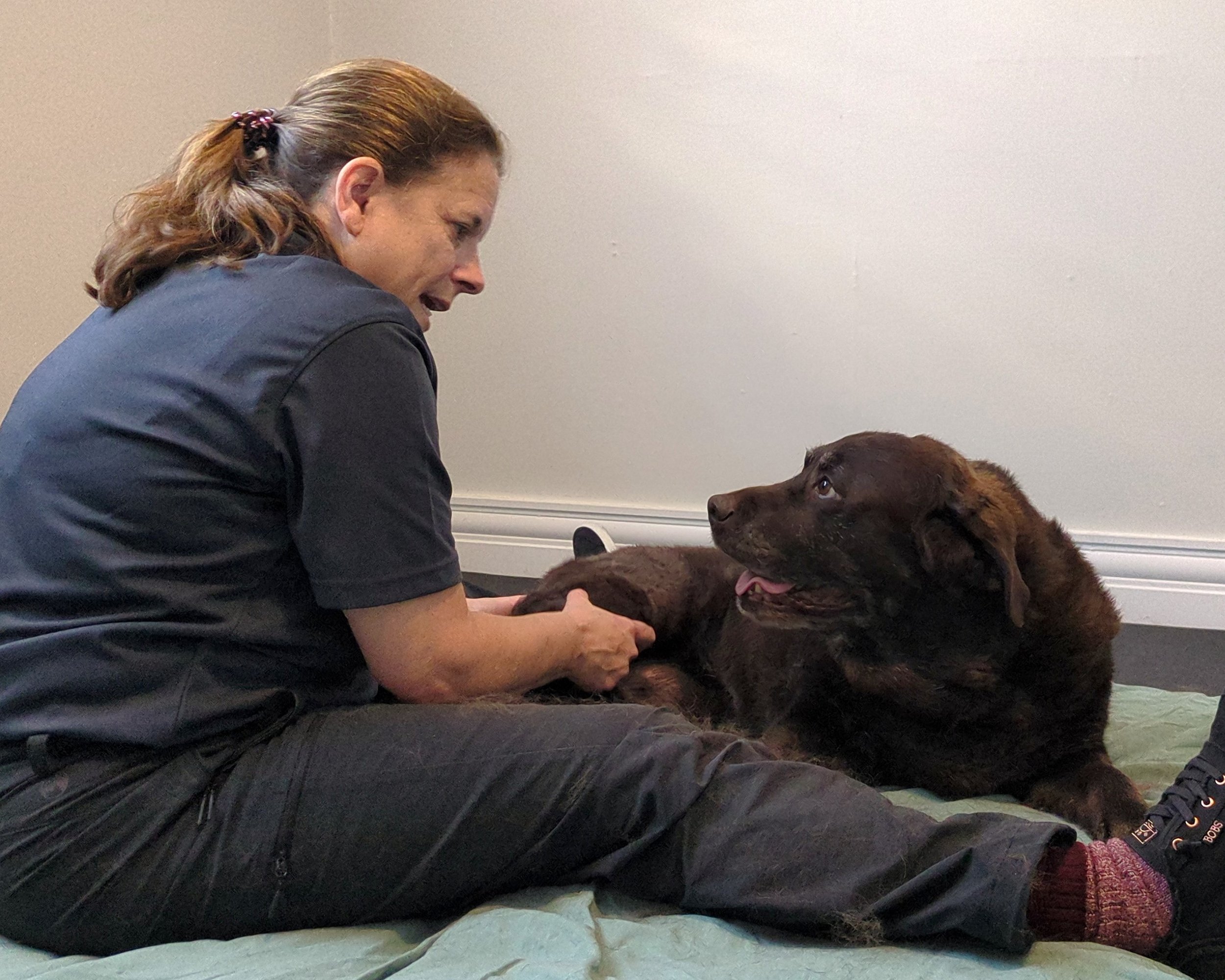
Helping dogs feel, move, and recover better
Canine massage is a hands-on therapy that uses targeted techniques to work with the muscles and soft tissues of the body. At Pawsio, massage is used as part of a broader approach to canine wellness, movement, recovery, and physical conditioning.
Whether your dog is an active athlete, recovering from an injury, managing age-related changes, or simply carrying some extra tension through their body, massage can be a useful addition to their care plan.
What is canine massage?
Canine massage involves the skilled manipulation of muscles and other soft tissues using techniques selected for the individual dog.
Depending on the dog's needs, a session may include techniques such as:
Gentle effleurage and compression
Petrissage and kneading
Myofascial techniques
Muscle release techniques
Passive range-of-motion work
Gentle stretching
Techniques to support relaxation and body awareness
The goal isn't simply to make your dog feel good, although many dogs certainly appreciate that part. Massage can also help us better understand how a dog is using their body and identify areas of tension, sensitivity, or asymmetry that may be worth discussing with their veterinary team.
Who can benefit from canine massage?
Massage may be beneficial for dogs with a variety of needs, including:
What happens during a massage session?
Your dog's first massage appointment is a 60-minute initial session. This gives us time to get to know your dog, discuss their history and current needs, and observe how they stand and move before beginning hands-on work.
We'll talk about your dog's age, activity level, health history, any areas of concern, and what you'd like to accomplish through massage. We'll also take time to see how your dog responds to handling and determine the most appropriate approach for their first session.
During the massage, your dog will be positioned in ways that are comfortable and appropriate for them. Techniques and pressure are adjusted based on their response throughout the appointment.
Your dog does not need to lie perfectly still or tolerate something they're uncomfortable with. Reading the dog's body language is an important part of the process. If your dog needs a break, a change of position, or a different approach, we adjust accordingly.
Initial Massage Appointment | 60 minutes
$105+ HST
Follow-up massage sessions
Once we've completed your dog's initial session, we'll recommend the follow-up session length and frequency that best suits your dog.
Follow-up appointments are available in 20-minute or 40-minute sessions, depending on your dog's needs and goals. Some dogs may benefit from shorter, more frequent sessions, while others may do better with a longer session at a different interval.
You don't need to figure this out on your own. We'll discuss our recommendations with you after your dog's initial appointment and adjust the plan as your dog's needs change.
Follow-Up Massage | 20 minutes
$45 + HST
Follow-Up Massage | 40 minutes
$70 + HST
When massage may not be appropriate
Massage isn't suitable for every dog or every situation. Depending on your dog's health and circumstances, massage may need to be postponed, modified, or avoided.
Examples may include acute injuries, unexplained pain, fever or systemic illness, certain skin conditions, recent surgery, or other medical concerns.
If we're unsure whether massage is appropriate for your dog, we'll recommend speaking with your veterinarian before proceeding.
Massage and rehabilitation
Canine massage can be offered as a standalone service or incorporated into a broader rehabilitation and conditioning program.
For dogs with an injury, medical condition, significant pain, or other health concern, massage should be considered as one part of their overall veterinary care rather than a replacement for diagnosis or medical treatment.
When appropriate, we work alongside your dog's veterinary team to make sure the services provided at Pawsio complement their medical care.
Meet Your Canine
Massage Therapist

Canine massage at Pawsio is provided by Kim Beukeveld, who has completed specialized training in canine massage and continues to build her education in canine movement, rehabilitation, and conditioning.
Her training includes [NAME OF MASSAGE PROGRAM / SCHOOL], where she studied [SPECIFIC TRAINING, CERTIFICATION, PRACTICAL COMPONENTS, ETC.].
This education provides a foundation in canine anatomy and movement, massage techniques, appropriate pressure and handling, and recognizing situations where massage may not be appropriate.